Our Growth Space - Wellness in Action
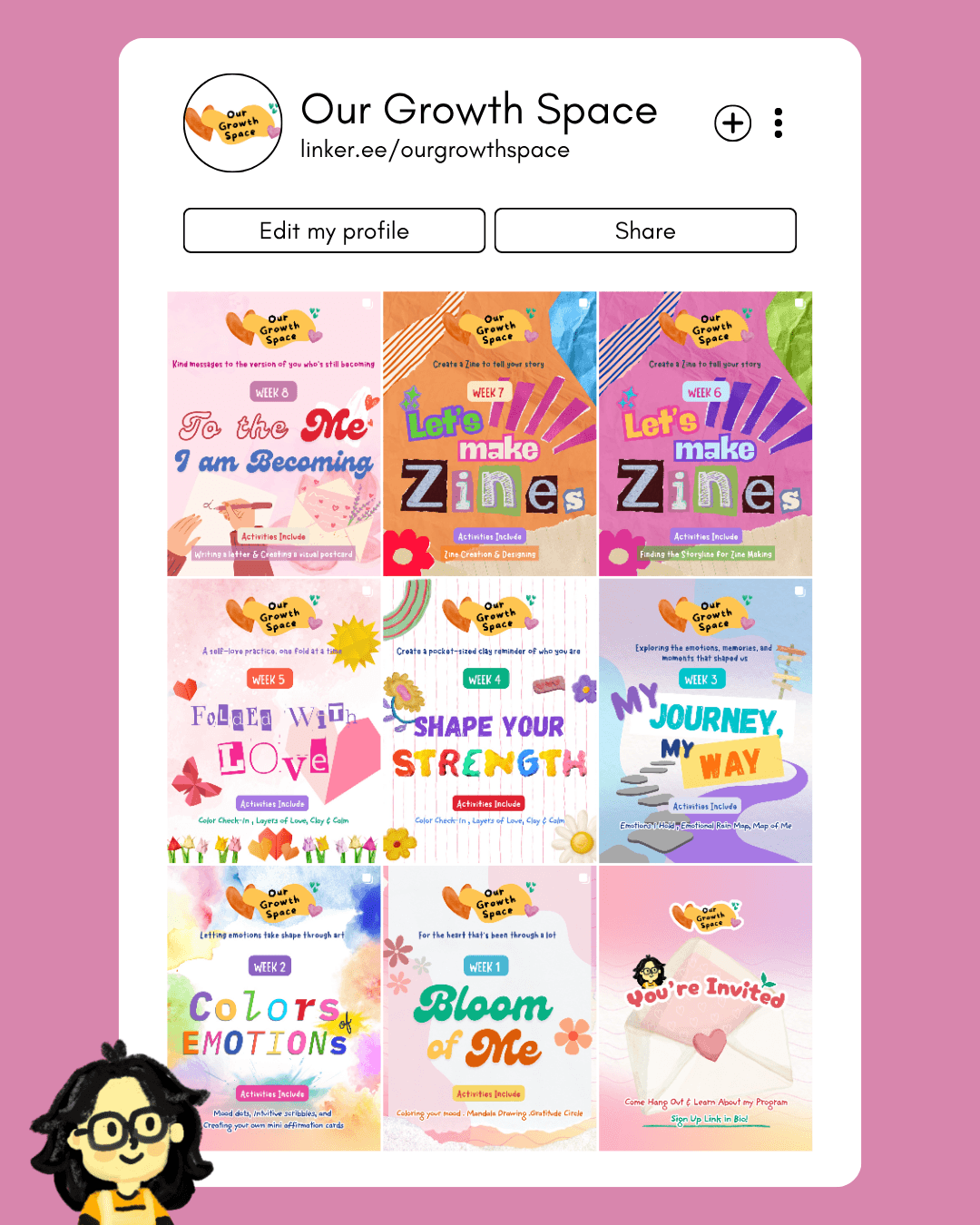
Our Growth Space - Wellness in Action Program increased participant engagement by 40% through an 8-week trauma-informed wellness curriculum I designed and facilitated for BIPOC immigrant communities, blending art, storytelling, and mental health tools.
CERI
Wellness
Social Impact
Community UX
Event Design
Design Thinking
Program Design
Curriculum Design
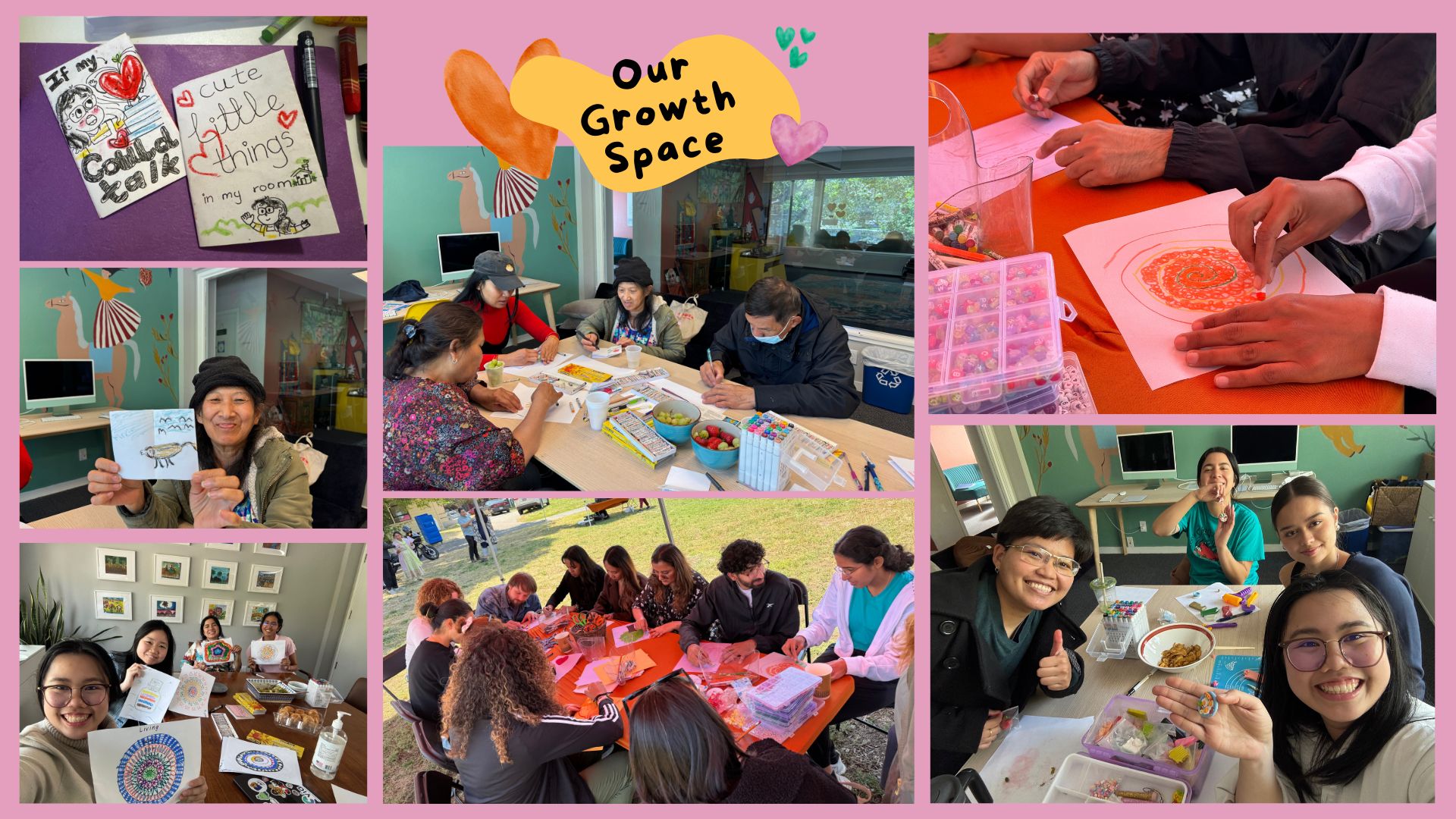
Our Growth Space – Designing a Trauma-Informed Wellness Experience
Overview
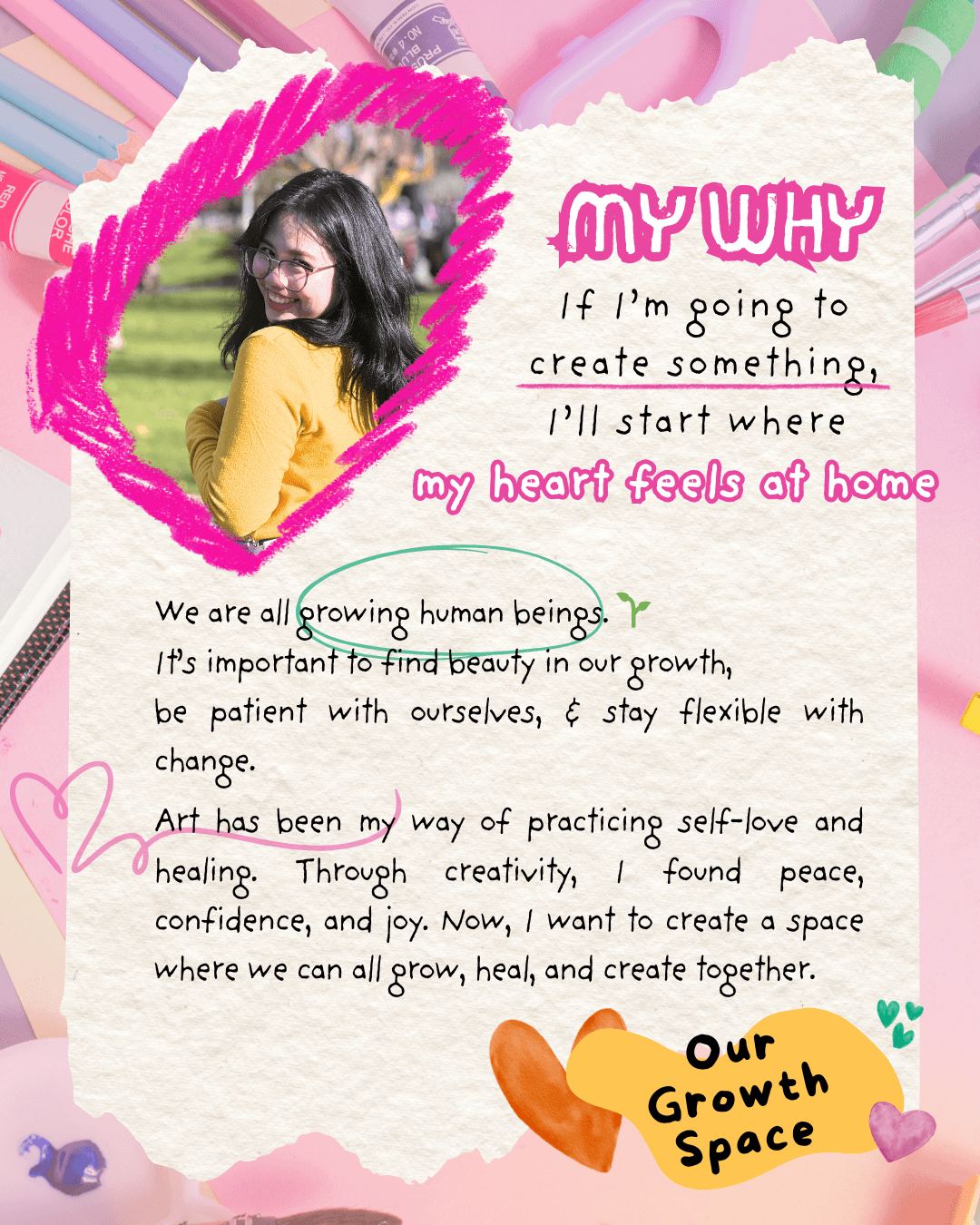
Our Growth Space is an 8-week trauma-informed wellness program I designed and facilitated for BIPOC immigrant communities through the Center for Empowering Refugees and Immigrants (CERI). The goal was to reimagine how wellness programs can balance emotional healing and creative engagement through art, storytelling, and reflection. By applying product design thinking to community wellness, I helped increase participant engagement by 40% and build deeper trust and connection among participants.
Focus Areas: Product Design · Program Strategy · Community UX · Social Impact
Timeline: Dec 2024 – May 2025
Client: Center for Empowering Refugees and Immigrants (CERI)
Role: Product Owner · Program Designer · UX Researcher
Tools: Miro · Canva · Google Forms · Eventbrite · Google Sheets
The Challenge
Many BIPOC immigrants in Oakland struggle to access mental health resources that are culturally safe and emotionally approachable. Existing wellness offerings were either too clinical and therapy heavy, or too surface level to create meaningful impact. The challenge was to design an experience that met people gently where they were, combining creativity, reflection, and community connection without forcing participants to relive trauma.
My Process
1. Discovery – Understanding the Community
My first step was to deeply understand the emotional and cultural context of my users, BIPOC immigrants and refugees who carry complex stories and healing journeys.
Conducted user interviews and informal discussions with past participants, therapists, and cultural leaders to uncover emotional barriers and needs.
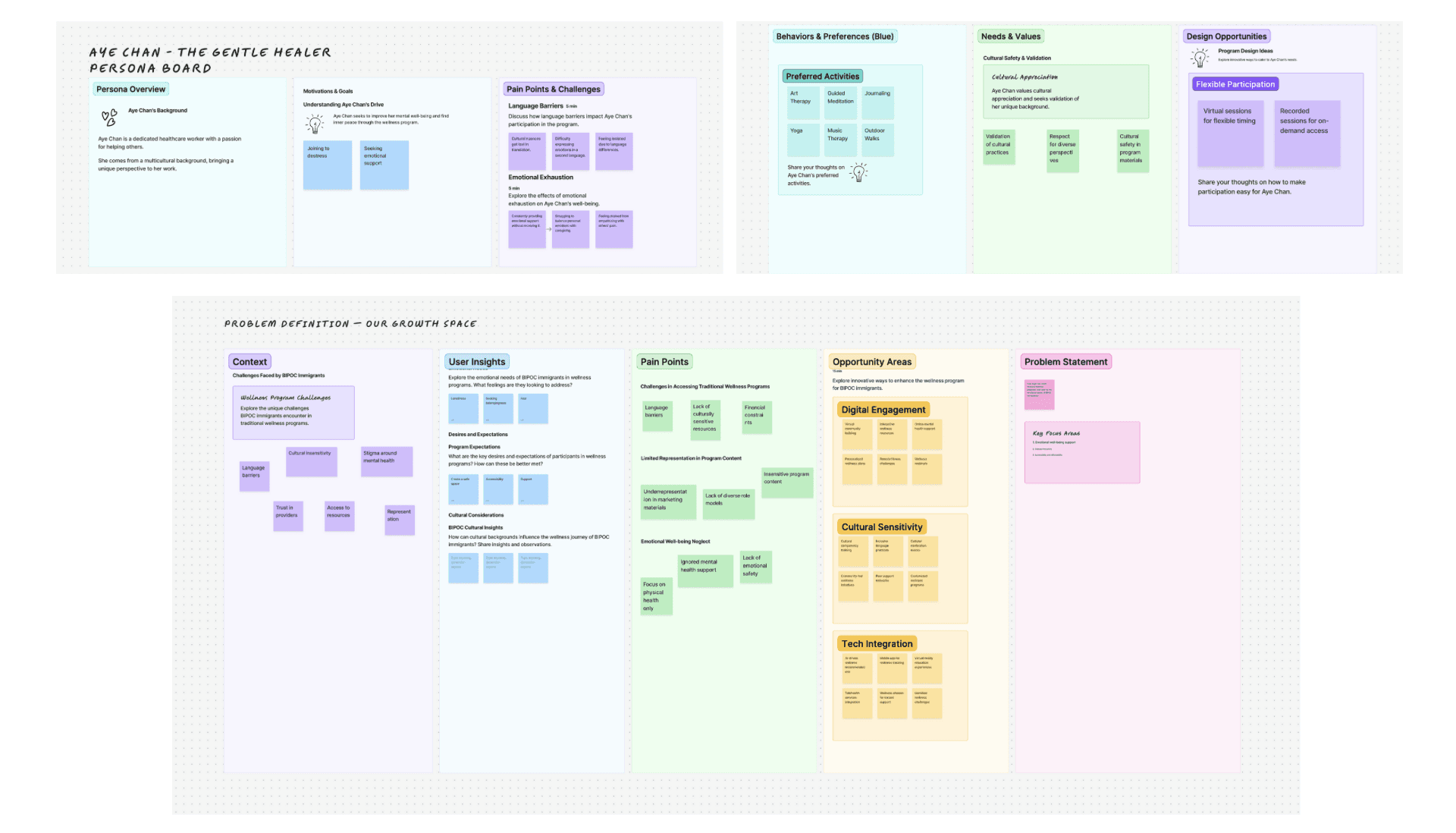
Created empathy maps and persona boards in Miro to visualize diverse experiences and sensitivities across participants.
Discovered a key insight: participants wanted creative reflection in safe, non-clinical environments where healing could emerge naturally.
As a Product Designer, I treated this like a user discovery phase, mapping emotional needs to experience design opportunities.
Deliverables:
Interview Scripts · Persona Boards · Problem Definition Document
2. Define – Framing the Opportunity
Next, I reframed insights into actionable design goals and measurable outcomes.
Crafted the problem statement:
“How might we design a creative wellness program that helps BIPOC immigrants process emotions gently and build community resilience without retraumatization?”Identified success metrics tied to user behavior and engagement rather than just attendance.
Defined KPIs to track outcomes:
40% engagement lift
Increased storytelling participation
Positive emotional sentiment from feedback forms
I visualized these insights in an experience map, aligning emotional arcs with program goals to clarify how each session would contribute to participants’ overall journey.
Deliverables:
Problem Statement · Metrics Dashboard · Experience Map
3. Ideation – Designing the Experience
With the problem space defined, I transitioned into ideation and co-creation, designing the emotional and creative flow of the 8-week program.
Conducted Design Thinking workshops with past facilitators to brainstorm activities that balance safety, creativity, and growth.
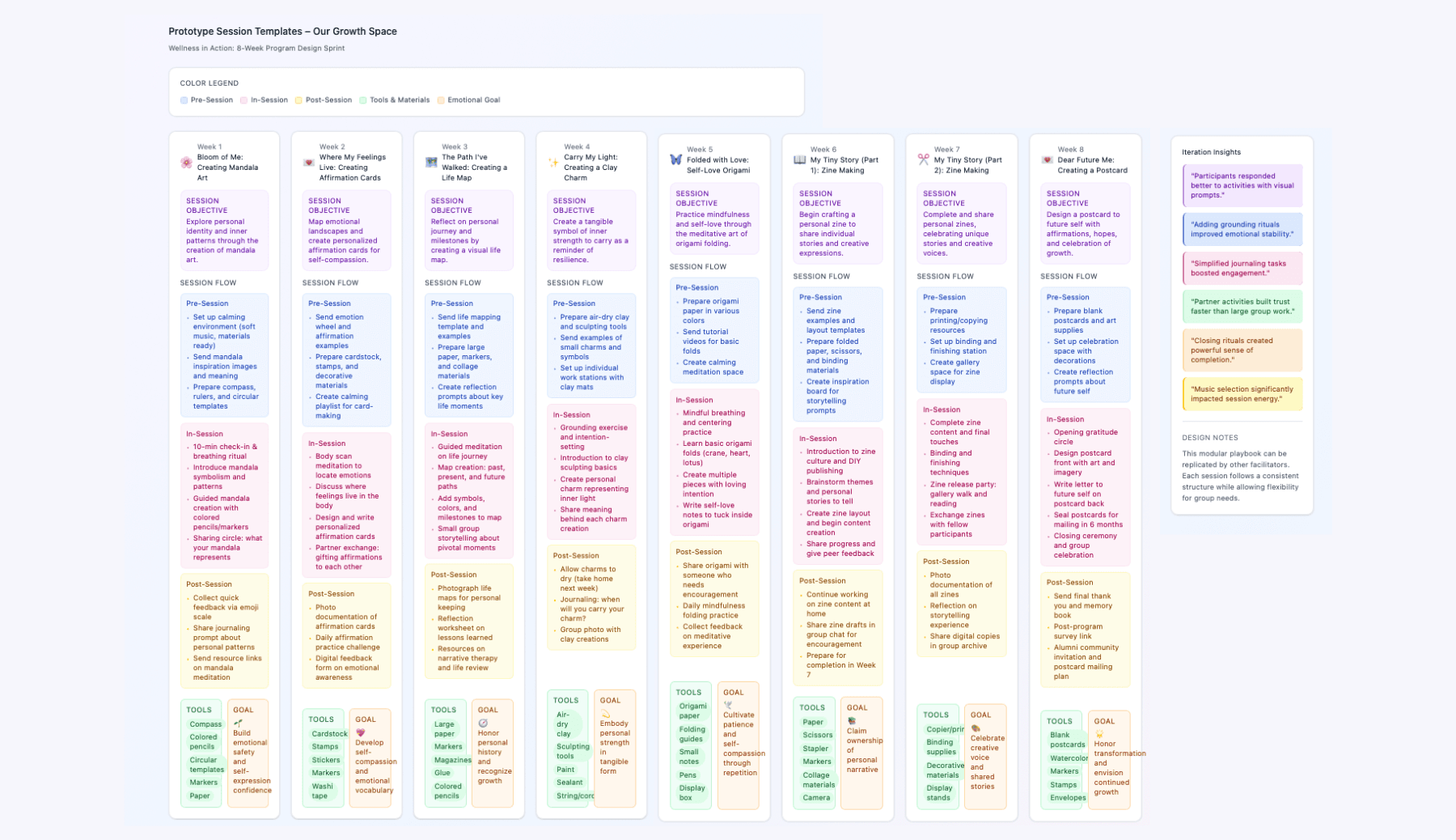
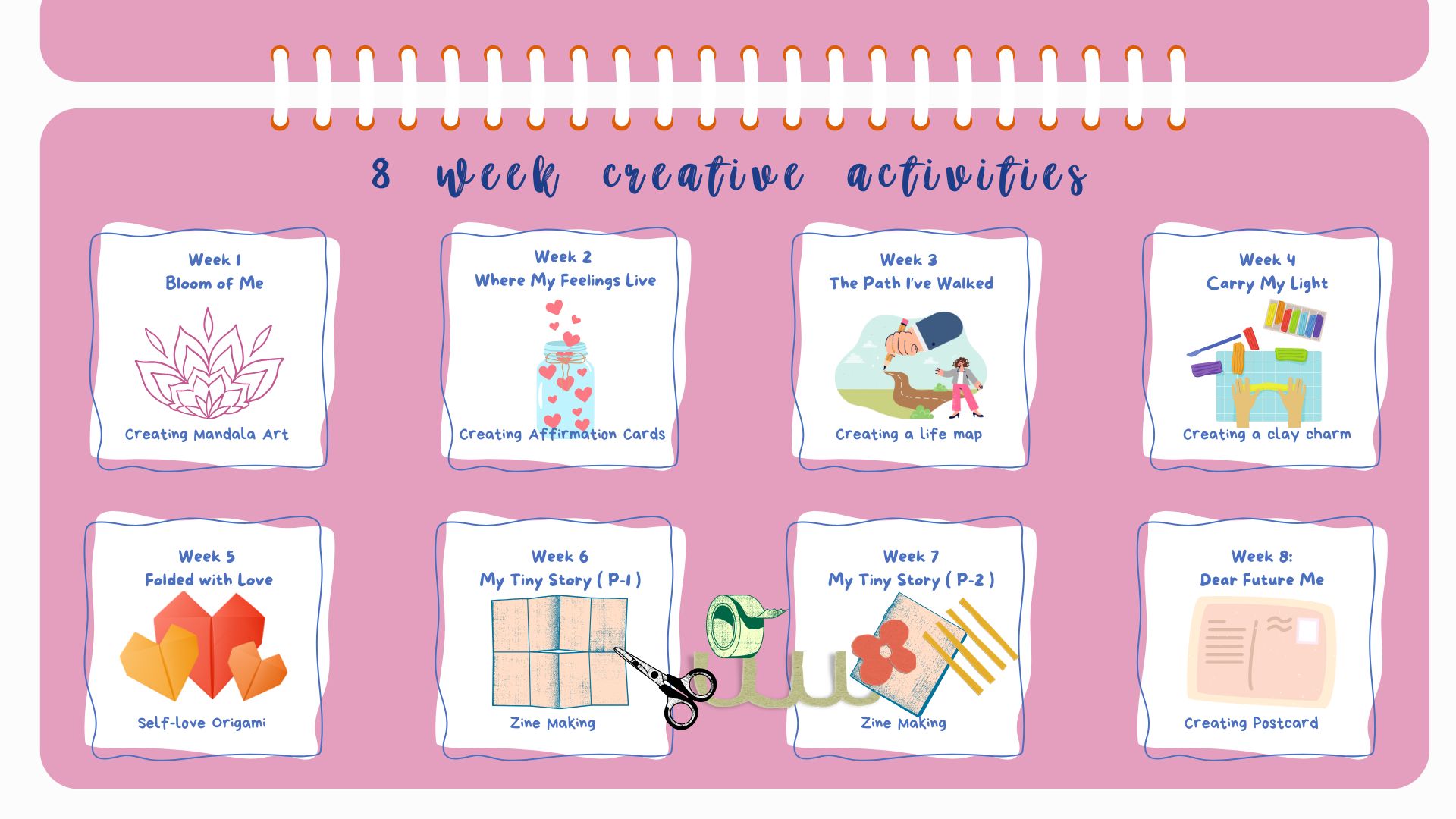
Prototyped an 8-week experience map in Miro, structured like a product lifecycle with weekly micro-themes such as Identity, Resilience, Boundaries, and Joy.
Designed each week as a mini product sprint:
Pre-session prep (reflection prompt or mood check-in)
In-session experience (guided art or storytelling activity)
Post-session feedback (journaling or visual reflection)
This approach brought UX process structure into a human-centered program, treating emotions and creativity as “user touchpoints” within the journey.
Deliverables:
Miro Journey Map · Facilitation Guide · Prototype Session Templates
4. Build – Program Development
I then transitioned from ideation to production, developing tangible materials and assets to support delivery.
Designed worksheets, slides, and visual reflection prompts in Canva to create consistency and accessibility.
Created two key interactive tools:
Emotional Rain Map: a visualization exercise helping participants track emotional states
Map of Me: a life journey mapping activity for self-reflection
Organized event logistics and digital outreach campaigns via Eventbrite and Google Sheets to ensure smooth participant management and attendance tracking.
This phase mirrored a product development sprint, transforming conceptual designs into functional, testable artifacts.
Deliverables:
Visual Assets · Journaling Toolkit · Campaign Plan
5. Test – Pilot & Iteration
Once built, I piloted the program with 12+ participants in a hybrid format (in-person and Zoom).
Used Google Forms and live emotional check-ins to gather both qualitative and quantitative data after each session.
Analyzed feedback weekly to identify friction points and opportunities for improvement.
Iterated in real time by simplifying instructions for clarity, adding more grounding rituals for safety, and adjusting pacing to reduce emotional fatigue.
This iterative testing process reflected Lean UX principles, adapting based on continuous user feedback loops.
Deliverables:
Feedback Reports · Iteration Log · Participant Emotion Insights
6. Launch – Community Impact
After refining the program through multiple iterations, I delivered the final version and supported CERI in scaling it for future cohorts.
Compiled a facilitator guide and curriculum toolkit to ensure replicability.
Hosted a closing reflection session to evaluate outcomes through participant stories and emotional feedback.
Presented key findings and design recommendations to the CERI leadership team to integrate trauma-informed design principles across their other initiatives.
Deliverables:
Final Curriculum · Reflection Report · Replication Toolkit · Eventbrite events · Instagram Account Set up & posts
Impact
40% increase in participant engagement and completion rates
100% participants reported feeling emotionally safe and creatively inspired
CERI integrated design tools like journaling maps and rituals into future wellness programs
Cross-community collaboration emerged as participants co-created new art workshops after the program ended
Reflection
This project taught me to apply product design frameworks to a social impact setting, designing not just for efficiency but for empathy.
I learned that:
Emotional journeys can be mapped like user journeys
Iteration is as vital in healing design as in digital product design
Creating space for user co-creation leads to deeper impact and ownership
Ultimately, Our Growth Space was more than a wellness program. It was a human-centered design experiment in how we can design safety, trust, and creative growth for communities often left out of traditional wellness systems.
 |
|---|